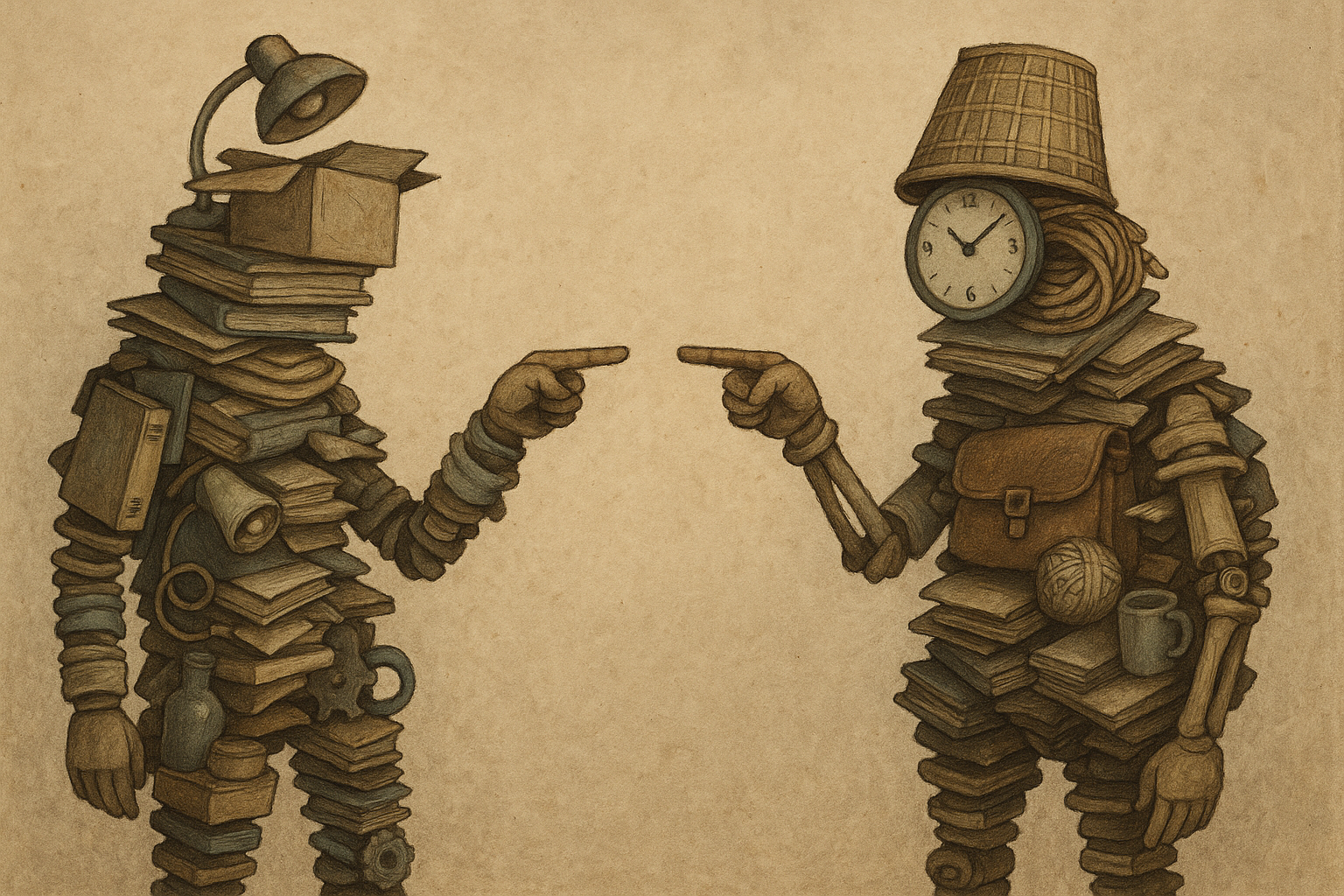
Op Ed: I’m a Fraud! How to Deal with Burnout and Imposter Syndrome in IT
I, like many IT professionals have been afflicted with a career curse. Symptoms include: tight chest, foggy headspace, self loathing, self doubt, hypersensitivity, the fear of failure, difficulty with acceptance, and more. Its almost enough to make you want to stop being an IT professional.
There’s so many branches of IT, so many hats to wear, and so many faucets to be adept in. There’s entire sciences dedicated towards the tasks we are obliged to support as IT professionals.
You’ve got:
- Networking
- Hardware/Infrastructure Support
- Software Support
- Cryptography
- Vendor Management
- Software Support
- Programming
- Endpoint Management
- Asset Management
- Mobile Device Management
- Infrastructure Management
- Web Management
- Cybersecurity
- Tiers 1, 2, and 3 Support
- IT Architecture
- IT Project Management
- Technical Writing
And that’s only a portion of what all “Information Technology” can entail. Hell! Some IT pros even have to fix the coffee maker when it breaks! (1) Some teams have support and can work towards being a subject matter expert (SME); others do not. With so many avenues to master, it can be challenging to let our feeble human minds be content with our performance. And that’s where Imposter Syndrome starts to kick in.
P.S. This write-up has been in the works for weeks, but I’ve been suffering from Imposter Syndrome with thoughts of “Am i qualified enough to write on this?” as well as suffering against my career goals.
Section 1 | What is Imposter Syndrome?
At first, Imposter Syndrome sounds you’re running around with a doppelganger loose, like the movie Us by Jordan Peele, but alas, its something much more tragic. Imposter Syndrome can be summed up, in short, as a feeling of personal fraudulence (2) or in normal speak, no matter how hard you try, you just feel like you’re faking your way through it; the feeling of self-doubt towards yourself professionally and/or intellectually. While Imposter Syndrome isn’t classified as a mental illness, people afflicted have an increased chance of suffering from depression as a result. (3)
Section 2 | What causes Imposter Syndrome?
There are many triggers for Imposter Syndrome, but here are a few that I’ve personally identified.
Burnout: When I’m dealing with Imposter Syndrome, typically, I’m highly burnt out. I’m thrown to the wolves with several high-level tasks that require lots of research to complete successfully. My reasoning brain shuts down and I start thinking “Man, I’m just NOT good at this IT thing”, which spirals into full fledged thoughts of “I’m just not cut out for this line of work.” Burnout can be a huge factor in breaking down your mental stamina, which lets the “bad thoughts” creep in.
Unreasonable Self-Expectations: Its easy to hold yourself to high expectations. As a millennial, I was taught from a young age the mantra: “I want to be the very best, like no one ever was”. I want to be the best at endpoint management. I want to be the best at PowerShell scripting. I want to be the best IT support person. I hold myself to very high standards, and, like a professional sports team, loses and setbacks sting. I didn’t meet the deadline on my Always-On VPN project. My PowerShell script just isn’t working. I accidentally bricked the firewall during work hours. Thoughts of being fraudulent start to roll in.
Comparing Yourself to Others: You may begin to see your peers differently. Maybe they took a different approach to a problem. Maybe they finished a task faster than you could. Maybe they’ve met their professional goals. You start dwelling on thoughts like: “How are other professionals doing this? I couldn’t even do that.”
Section 3 | Help! I think I have Imposter Syndrome, or maybe I’m burnt out. What do I do?
Good. You’ve identified your feelings and have come to a reasonable conclusion. Maybe it took you a while to get in this mind space, but its great that you have identified that something in your mind isn’t right. That’s the first step.
Here are some tips and tricks that I’ve learned to kick me out of my Imposter Syndrome.
- Celebrate little wins: Maybe you’ve completed an easy task. You still completed a task. Stop comparing yourself to others and mark it as a win. View every task as a puzzle that you’ve just solved. It doesn’t matter if you feel it was an entry level puzzle or an advanced puzzle; you still solved the puzzle. You CAN do this: claim your prize!
- Step away: I know this is easier said than done. I’ve been in the trudges of a task, vying to finish it, only for Imposter Syndrome to step in. That’s when I know that I need to step away for a bit. Get up and grab some water (or your 2nd cup of coffee), go out and get something for lunch; it doesn’t matter. Just isolate yourself from the task at hand for a moment. Breaks are good.
- Remember – You’re only human: Again, easier said than done, I know. In an environment of high-pressure, time constraints, and expected perfection, its highly probably that mistakes happen. Own them. Learn from them. Superman and Wonder Woman are fictional characters, and even in the source material, they make mistakes. They fail sometimes. They learn from that failure, and they’re written to avoid that mistake again. With the amount of “processing power” our minds expend when working through a task, not to mention managing our own lives, its easy for details to get lost in the cracks. Remember: your human brain can only use up so much processing. You can’t take on the whole world at once.
Section 4 | Final Thoughts
Imposter Syndrome is a hell-of-a beast. I imagine just about every human being on this planet has suffered from it. This affliction can topple an empire’s worth of confidence. But its OK, you aren’t alone. Its easy to feel like you aren’t good enough when the stakes are high, when you’re burnt-out, or when you make a mistake.